




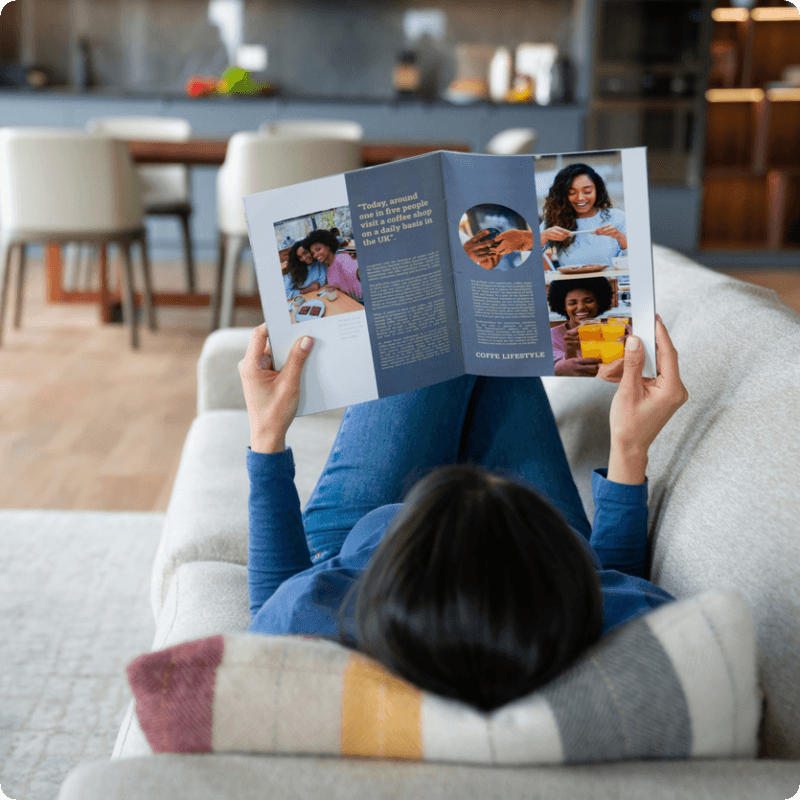
Communicating with customers using formats they love makes them more likely to pay attention. For marketing materials, that means sending more print.
Over the years, dozens of studies have examined the impact of print on human comprehension and learning. Information read in print embeds more deeply in the brain, is easier to recall, and is recalled more accurately. But buyers don't love print simply because they remember things better. They love it because it makes them feel good.
For example,
- Consumers find hard-copy versions of books, magazines, and newspapers more enjoyable than electronic alternatives.
- Consumers see print as more relaxing to read than computer screens, e-readers, and (yes, even) smartphones.
- Consumers are becoming increasingly aware of (and concerned about) the health effects of spending too much time on electronic devices.
Health concerns about the overuse of digital media are growing, and that concern is increasing the “feel good” factor of traditional printed materials, whether books, magazines, or direct mail.
One study from Two Sides/Toluna found that, even several years ago, consumers were already showing signs of concern. The study found that consumers . . .
- believed they spend too much time on electronic devices,
- were concerned that the overuse of electronic devices could be damaging to their health, and
- believed in the importance of "switching off" and reading more in print.
These feelings have only been amplified since the COVID-19 pandemic, with the time children spend staring at their screens up 52%. As news reports on the impact of over-digitalization on our culture rise, more and more consumers ask themselves, “Am I spending too much time on my screen, too?”
The takeaway? If you love your customers, then love what they love. Digital communications have their place in the multichannel mix, but when it comes to "feeling the love," it's still very much about print.
